

Your Biggest Supplier Is Not Always Your Biggest Risk
Most supplier reviews begin by looking at cost. The largest contract gets the most attention, followed by the highest-volume input and the supplier that would be hardest to replace. That is usually a sensible commercial screen. But it is not a complete risk map.
More than 4,500 matched product records show why. When product footprints built from detailed process data were compared with sustainability footprints estimated from spending, more than half differed by over a factor of two. The invoice and the physical supply chain were describing different things.
What Cost Can and Cannot Show
Cost data tells a company how much it paid and which suppliers matter financially. It does not show transport distance, the carbon intensity of a supplier's electric grid, the processing already embedded in an input, or whether a material ultimately depends on one region or facility.
It can also produce a misleading signal. If a company negotiates a 10% discount on the same material, a cost-based sustainability footprint falls by 10% even though the material, factory, route, and emissions have not changed.
That distinction matters because upstream supply-chain emissions are, on average, 26 times a company's operational emissions. The largest part of the sustainability footprint is often the part least visible in the company's own facilities.
The Smaller Line Item Can Carry the Bigger Risk
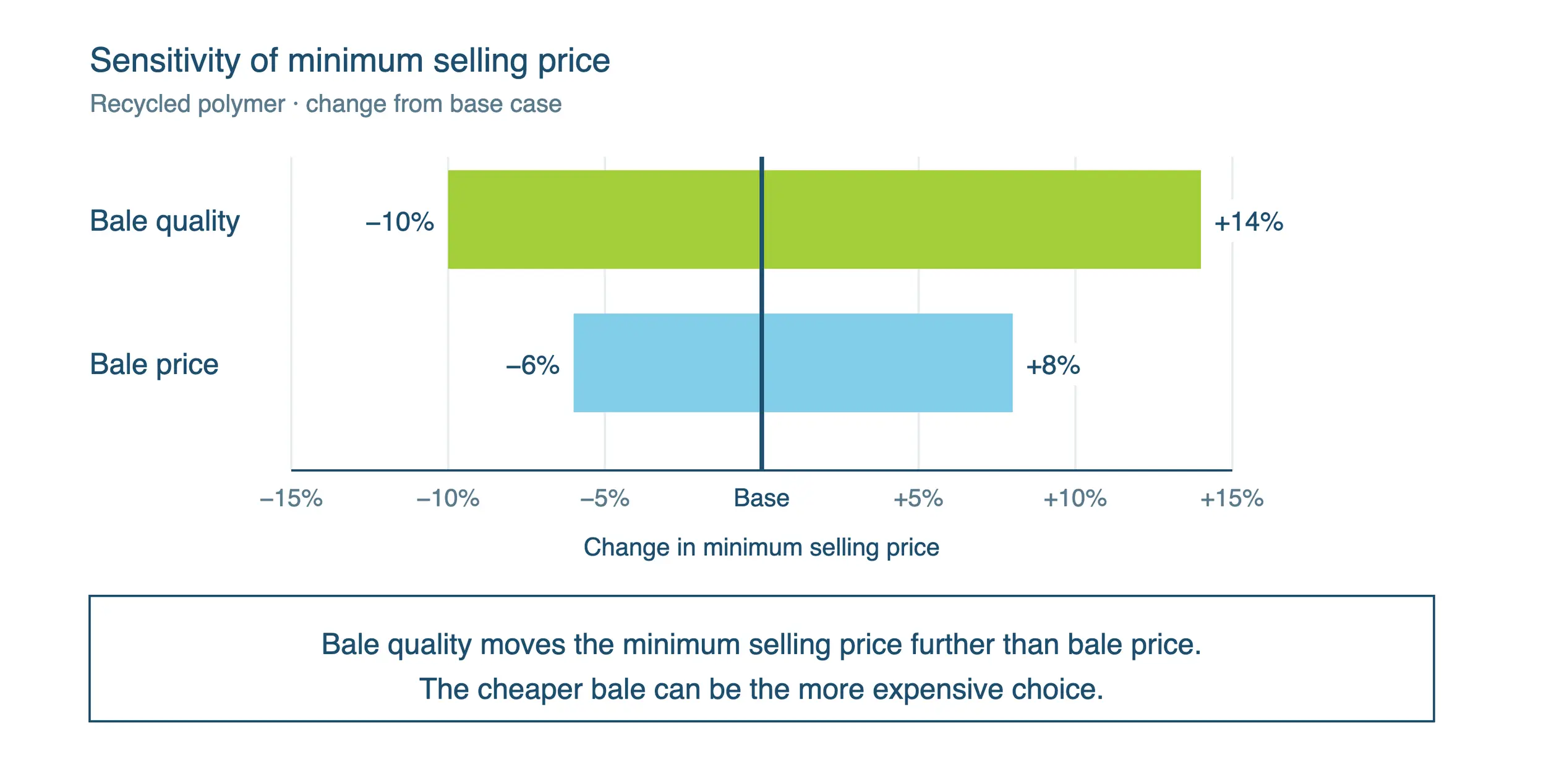
For a recycled plastic processor with bale as their feedstock, bale quality can matter more than bale price. Research cited in our August white paper found that bale quality changed the minimum selling price by as much as +14% or -10%, while bale price itself changed it by +8% or -6%. A cheaper bale can therefore be the more expensive choice if contamination lowers the amount of saleable pellet (what recycled plastic gets transformed into).
The same input can carry commercial risk. A low-cost material may depend on one collection system, one region, or one grid. If quality falls or supply is interrupted, production, margin, and the reported footprint move together. The risk was never proportional to the invoice.
Use Cost as a Screen, then Trace What Matters
Spend-based estimates are fast and useful for an initial company-wide view. The next step is to identify the inputs where better data could change a decision. That means tracing the material to the supplier, process, region, and energy source, then reporting uncertainty where primary data is unavailable.
Once the concentration is visible, the response becomes practical: qualify a second source, negotiate on quality rather than unit price, or test what a disruption would cost before it happens.
Where Boundless Makes a Difference
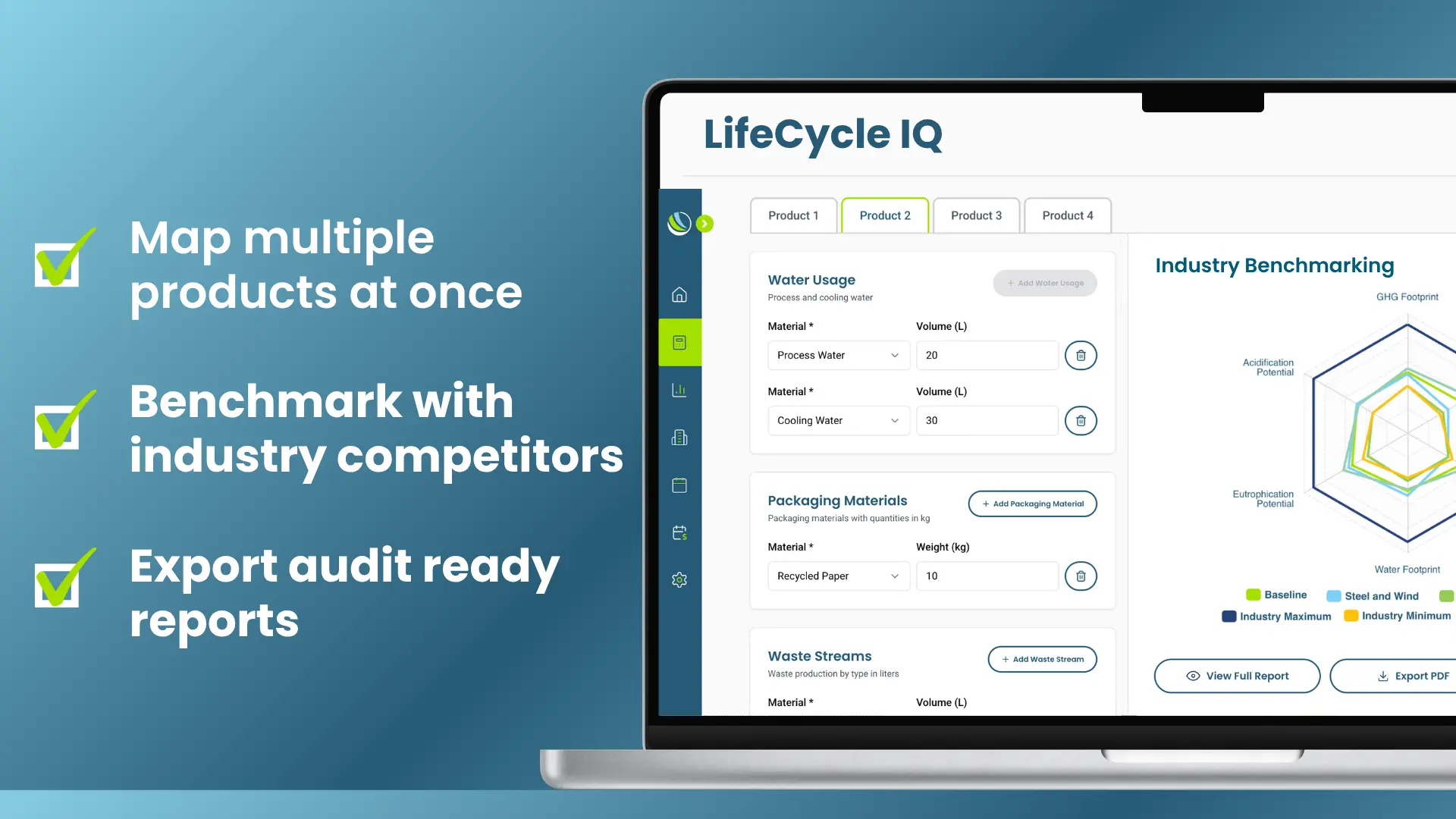
LifeCycle IQ places product-level sustainability performance, cost, and supplier information in the same model. Boundless researchers use primary research and verified data to show where an input is concentrated and how a supplier or sourcing change affects the result.
The point is not to replace procurement judgment. It is to give that judgment a more complete map.
Book a short call with our team. We'll analyze your product, uncover hot spots and opportunities, and show what LifeCycle IQ can do for you.


