

Are You Making Million-Dollar Decisions with Flawed Sustainability Data?
A lower carbon footprint doesn't always mean a more sustainable business. By looking beyond carbon emissions, companies can identify hidden environmental costs, make smarter product and supplier choices, and give investors and customers stronger evidence to support their environmental claims.
A company can report lower carbon emissions, set ambitious environmental targets, and promise a greener supply chain. But do those numbers tell the whole story?
For investors assessing cleantech companies, SMBs, and larger businesses, sustainability data can reveal how well a company understands its operations, manages risks, and prepares for changing market expectations.
But broad estimates and incomplete measurements can hide risks and leave investors with unanswered questions. Reliable sustainability data gives both sides a clearer basis for evaluating performance, priorities, and opportunities. For investors, these details can form part of commercial and operational due diligence, alongside financial results, management quality, market potential, and future resilience. They are relevant whether the opportunity is an early-stage cleantech venture, an established SMB, or a larger company expanding into new markets.
Your Carbon Calculator Could Be Off by 60%. What Does That Mean for Your Business?
Many companies use carbon calculators to estimate greenhouse gas emissions. These tools typically combine activity information, such as fuel consumption and electricity use, with emissions factors to produce an overall estimate.
However, measuring the product environmental impact of everything a business buys and produces is more complicated. Companies often work with thousands of materials, components, and suppliers, and detailed environmental information is not always available.
To fill these gaps, businesses may rely on cost-based estimates. These can provide a starting point, but they do not necessarily reflect the actual environmental impact of a particular product or supplier.
Boundless Impact Research & Analytics explains this challenge in its white paper, Carbon Calculator vs. LCA: Which One Do You Need? According to the research, cost-based emissions estimates can overestimate or underestimate actual emissions by as much as 60%.
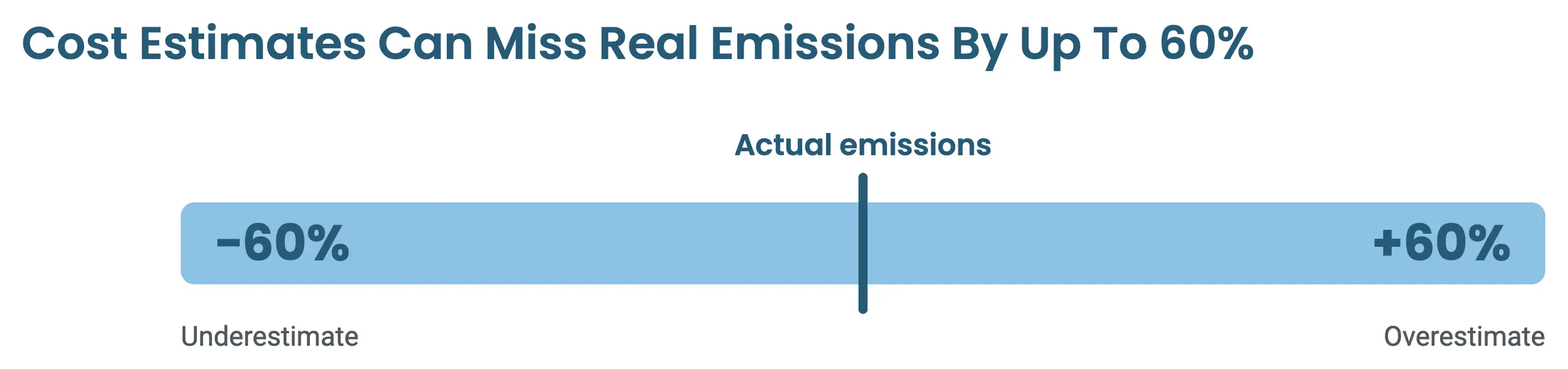
That margin matters when a company is comparing suppliers, setting reduction targets, or deciding which materials to use. More accurate sustainability data helps decision-makers move beyond industry averages and understand what is happening at the product level.
76% Trust Verified Sustainability Data More. Can Your Claims Stand Up?
Environmental claims are easier to make than they are to prove. Investors, customers, and business partners increasingly need evidence that supports the numbers companies publish.
Boundless' white paper cites a 2024 PwC survey of 345 investors and analysts. In the survey, 44% said they believed corporate sustainability reporting contained unsupported claims to a large or very large extent. Meanwhile, 76% expressed greater trust in independently verified data.
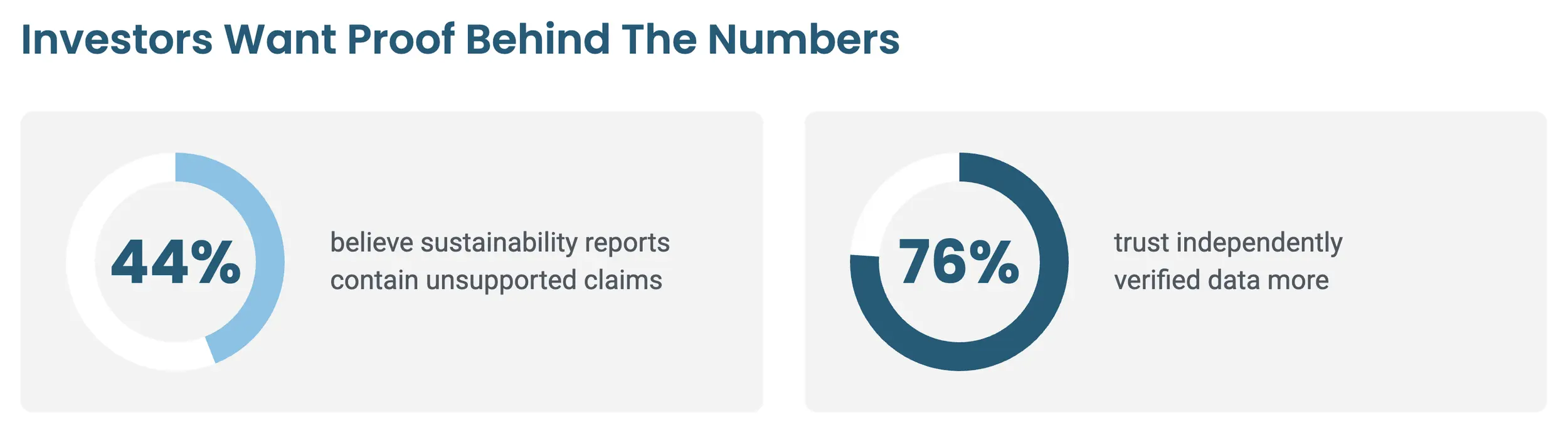
This highlights an important distinction: announcing an environmental target tells stakeholders what a company hopes to achieve. Reliable information shows where it stands and gives others a way to assess its progress.
For growing businesses and cleantech companies seeking investment or new commercial relationships, credible environmental performance data explains their decisions and supports their claims. It does not guarantee funding or prove that a business is well managed, but it gives stakeholders a strong basis for evaluating what the company reports.
Are Carbon Calculators Giving Businesses False Confidence?
Carbon emissions are important, but they are only one part of a product's environmental impact. Materials, manufacturing processes, energy sources, and transportation can also affect water use, land, toxicity, and air pollution.
A long-duration energy storage system assessed by Boundless illustrates why this broader view matters. Its analysis found that the technology could produce approximately 120 times fewer greenhouse gas emissions than conventional lithium-ion energy storage. However, it also uncovered trade-offs that a carbon-only calculation would have missed.
Copper made up around 16% of the product's mass but accounted for approximately 90% of its particulate matter impact. The assessment also found that an Ontario grid location with the lowest greenhouse gas footprint had the highest water footprint, at 18 times the baseline.
These findings show why companies need to understand more than one environmental measure before choosing a product design, material, or production location.
A Life Cycle Assessment (LCA) helps provide that broader view. It examines a product's environmental impacts throughout its life cycle, from raw material extraction and manufacturing to use and end-of-life treatment. Alongside greenhouse gas emissions, it can assess indicators such as water consumption, toxicity, and particulate matter.
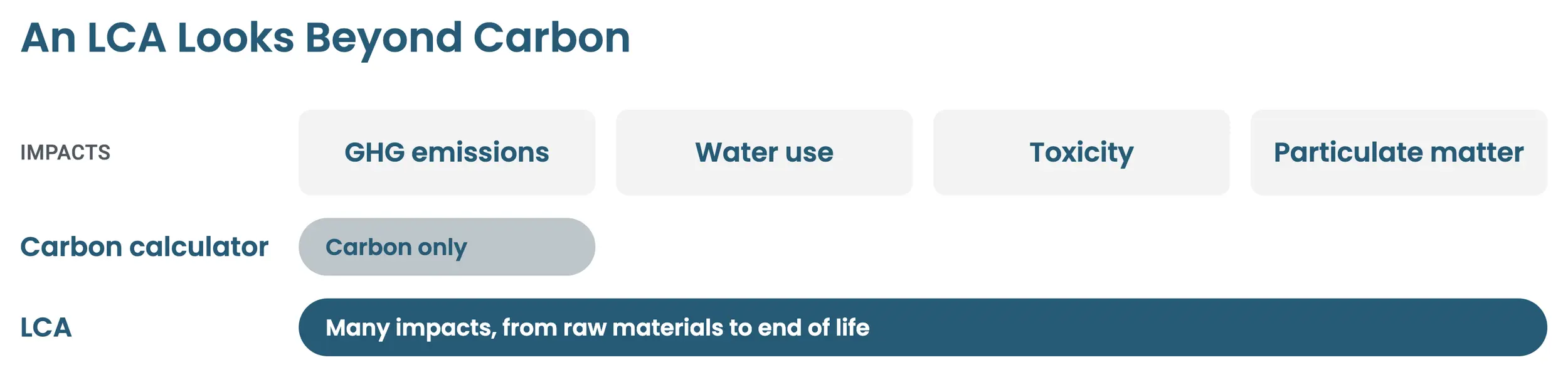
By examining these impacts together, companies gain a more complete understanding of a product's environmental impact. They can identify where the biggest problems occur, compare alternatives more accurately, and find opportunities to improve products and processes.
Is Bad Sustainability Data Costing Your Business More Than You Think?
Your supply chain could be hiding opportunities to reduce costs, improve resource efficiency, and gain a competitive edge. The challenge is knowing where to look.
Life Cycle Assessment (LCA) gives businesses a closer look at the environmental impact of individual products, materials, and manufacturing processes. By comparing suppliers, evaluating alternative materials, and identifying resource-intensive processes, teams can uncover ways to reduce waste, lower environmental impacts, and improve product performance without compromising business goals.
Is Your Sustainability Data Already Out of Date?
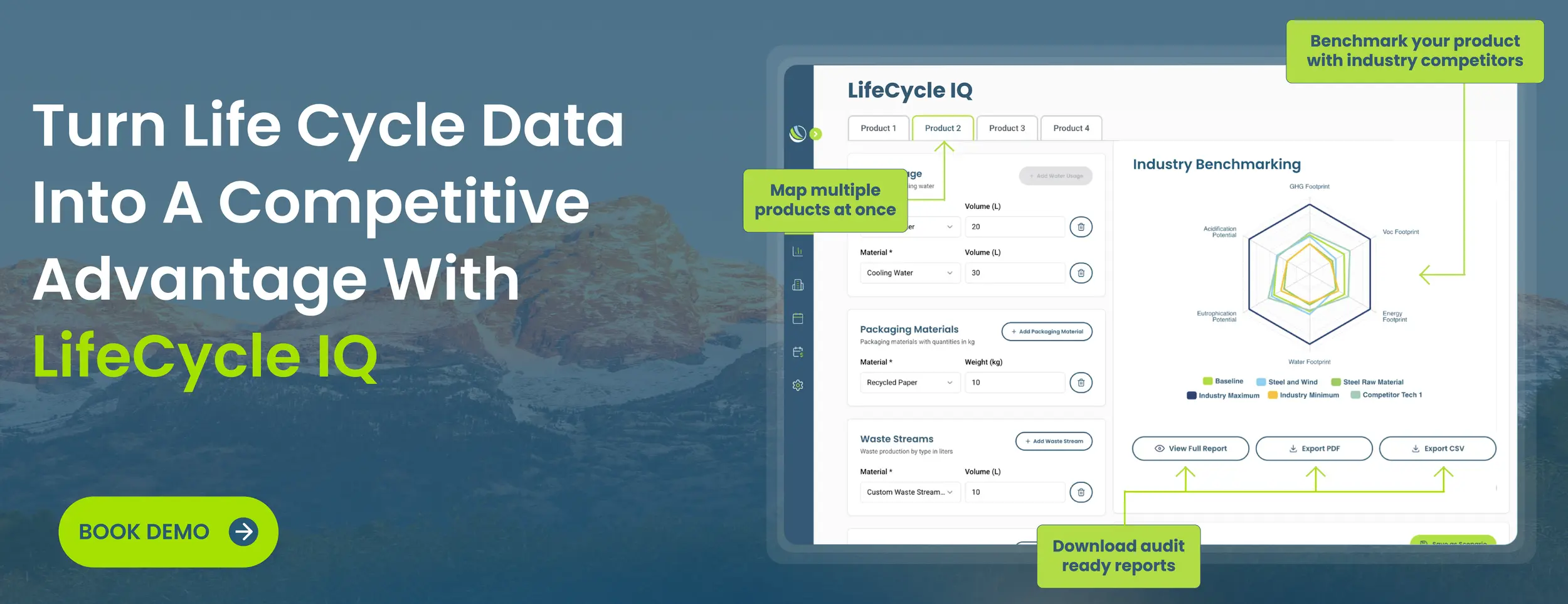
Boundless developed LifeCycle IQ to help companies keep LCA models current as products and processes change. Built around ISO 14040 and ISO 14044 methods, the platform brings product-level environmental analysis and cost information together. Third-party verification is also available when independent review is needed.
Ultimately, assessing whether a company is investable takes more than a polished report or a lower carbon number. Customers and investors need credible evidence of how a business measures its impacts, manages risks, and responds when the data reveals a problem. Companies able to explain their methods and support their claims are better prepared for that scrutiny.
When decisions involve specific products, materials, and suppliers, an LCA can reveal what a single carbon figure cannot. Download Boundless' white paper, Carbon Calculator vs. LCA: Which One Do You Need?, to explore the difference and learn how LifeCycle IQ brings sustainability and cost analysis together. Learn how LCA can help your business make more informed product and sustainability decisions.
See It in Action with LifeCycle IQ
Our LifeCycle IQ platform combines product-level LCA and cost analysis, benchmarked against 450+ industries, so you can compare suppliers, materials, and scenarios in one model that updates as your product changes — instead of a static study that's outdated in months.
Book a short call to see how your products perform beyond carbon, from water use to particulate matter.


