

Your Biggest Supplier Is Not Always Your Biggest Risk
The Takeaway
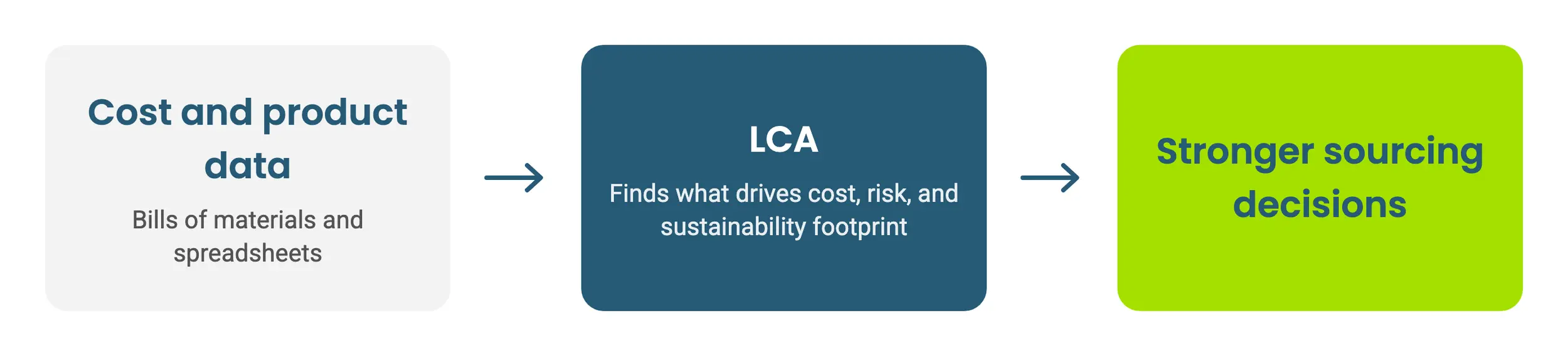
Cost data tell a team where money goes. Process data explain what that money buys, how the product is made, and where risk is concentrated. Using both gives sourcing teams a stronger basis for supplier qualification and negotiation.
1. Start With Cost Data
Supplier costs show where a company commits the most money and where data collection can begin. But they are not a complete measure of supply-chain risk or sustainability performance. A lower-cost input can carry a large sustainability footprint because of energy-intensive processing, long transport, poor yield, or a carbon-intensive grid.
Cost-based carbon calculations multiply dollars paid by an average factor for a product category. They are efficient for broad screening and company-level reporting, but less reliable for comparing suppliers that make similar materials in different ways.
2. Trace the Physical Supply Chain
Process-specific data often show a vastly different perspective on what drives emissions. Among more than 4,500 matched products cited in the Sustainability Pays white paper, detailed process footprints and cost-based estimates differed by more than a factor of two for over half of the products. A purchasing discount can also arbitrarily reduce a cost-based emissions estimate, even when the physical supply chain has not changed.

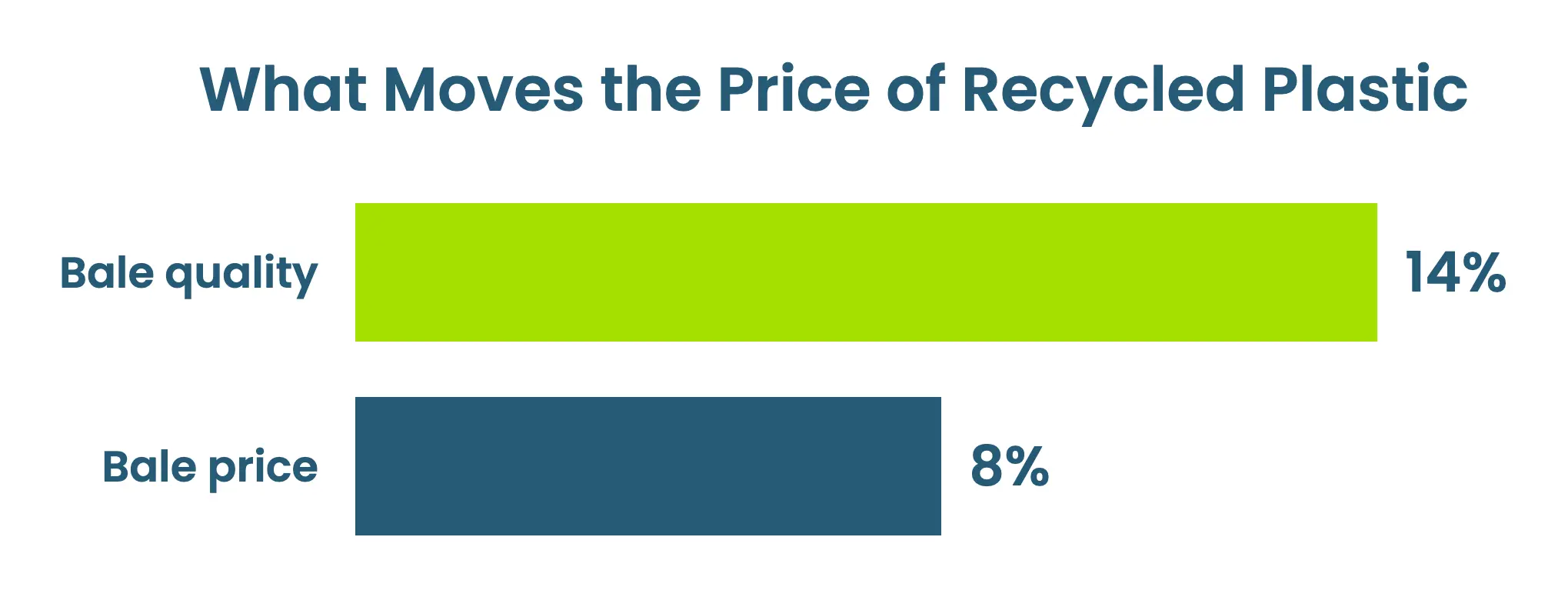
Recycled plastic provides a practical example. Research summarized in the white paper found that changes in bale quality shifted the modeled minimum selling price by about 14 percent, while changes in bale price shifted it by about 8 percent. Quality affected how much saleable material the process recovered, not just what the supplier charged.
3. Turn the Findings Into a Sourcing Decision
Once a Life Cycle Assessment (LCA) identifies the real driver, teams can test a second supplier, negotiate a quality specification, change transport routes, or model a disruption. The goal is not to replace procurement data. It is to connect purchasing decisions to the material and energy flows that determine cost, resilience, and sustainability performance.
4. Where Boundless Makes a Difference
Knowing where the risk sits is useful. Knowing what happens when you change it is even more useful.
LifeCycle IQ brings product-level LCA and cost data together so teams can test different sourcing and production scenarios before making a decision. It helps teams model those scenarios using consistent LCA data, industry benchmarks, and third-party data. Teams can then see how different choices affect both cost and sustainability performance, rather than making sourcing decisions based on purchase price alone.
The models can also be updated as market conditions change, giving teams a way to keep testing their options as supplier prices, materials, transport, and other factors change.
Download the White Paper
Our new paper shows how a single model can track cost and sustainability performance together, revealing "hot spots" — the life cycle stages quietly driving both your footprint and your bottom line. Inside, you'll learn how to spot hot spots before they become expensive, price a fix with real payback numbers, and keep your model current as suppliers and conditions change.
See It in Action with LifeCycle IQ
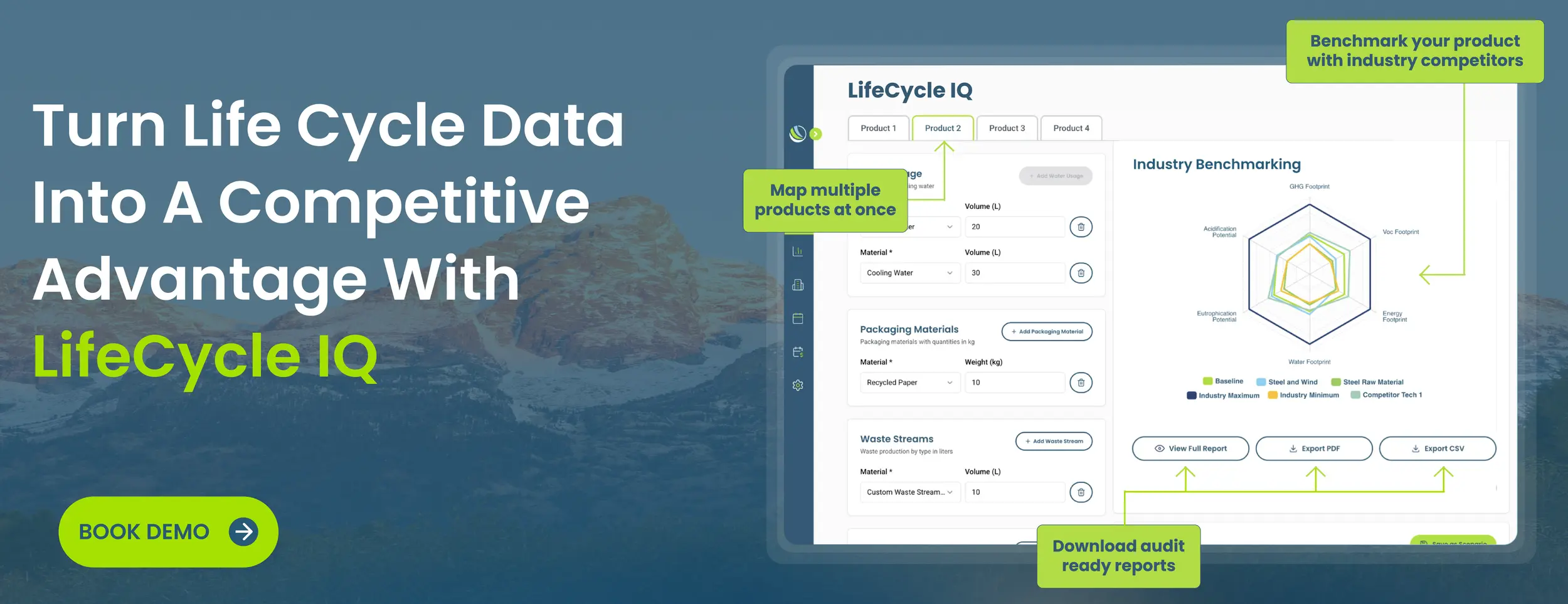
The white paper lays out the thinking. LifeCycle IQ is where it becomes a working tool. Our platform combines product-level LCA and cost analysis, benchmarked against 450+ industries, so you can compare suppliers, materials, and scenarios in one model that updates as your product changes — instead of a static study that's outdated in months.


