

The Next Trade War Won’t Be About Tariffs. It’ll Be About Carbon.
A tariff announcement can change the cost of doing business overnight. But companies now face another challenge: governments are asking for more information about how products affect the environment. New environmental rules across the EU and about a dozen countries are pushing businesses to explain how their products are made, what materials they use, and detailed information on pollution and emissions footprint.
In addition to the EU’s rules, the UK starts charging a carbon tax on imported goods on January 1, 2027. China is writing carbon accounting rules for about 100 key products by 2027, starting with steel, aluminum, lithium batteries, and electric vehicles. In the U.S., New York and Colorado have followed California’s lead and adopted rules on the carbon in materials used for public projects.
Without reliable data on how much carbon goes into their products, companies pay more, struggle to meet customer needs, or lose business to competitors that can provide clear and verified data.
How CBAM Turns One Carbon Price Into Many
Carbon rules spread beyond the markets that introduce them. The EU’s Carbon Border Adjustment Mechanism (CBAM) puts a carbon price on imports such as steel, cement, and aluminum, and subtracts any carbon price the producer already paid at home. So a country that charges its own producers for carbon keeps that money, instead of letting the EU collect it at the border. A Bruegel study of 163 countries found that those more exposed to CBAM have been more likely to announce carbon pricing since 2019.
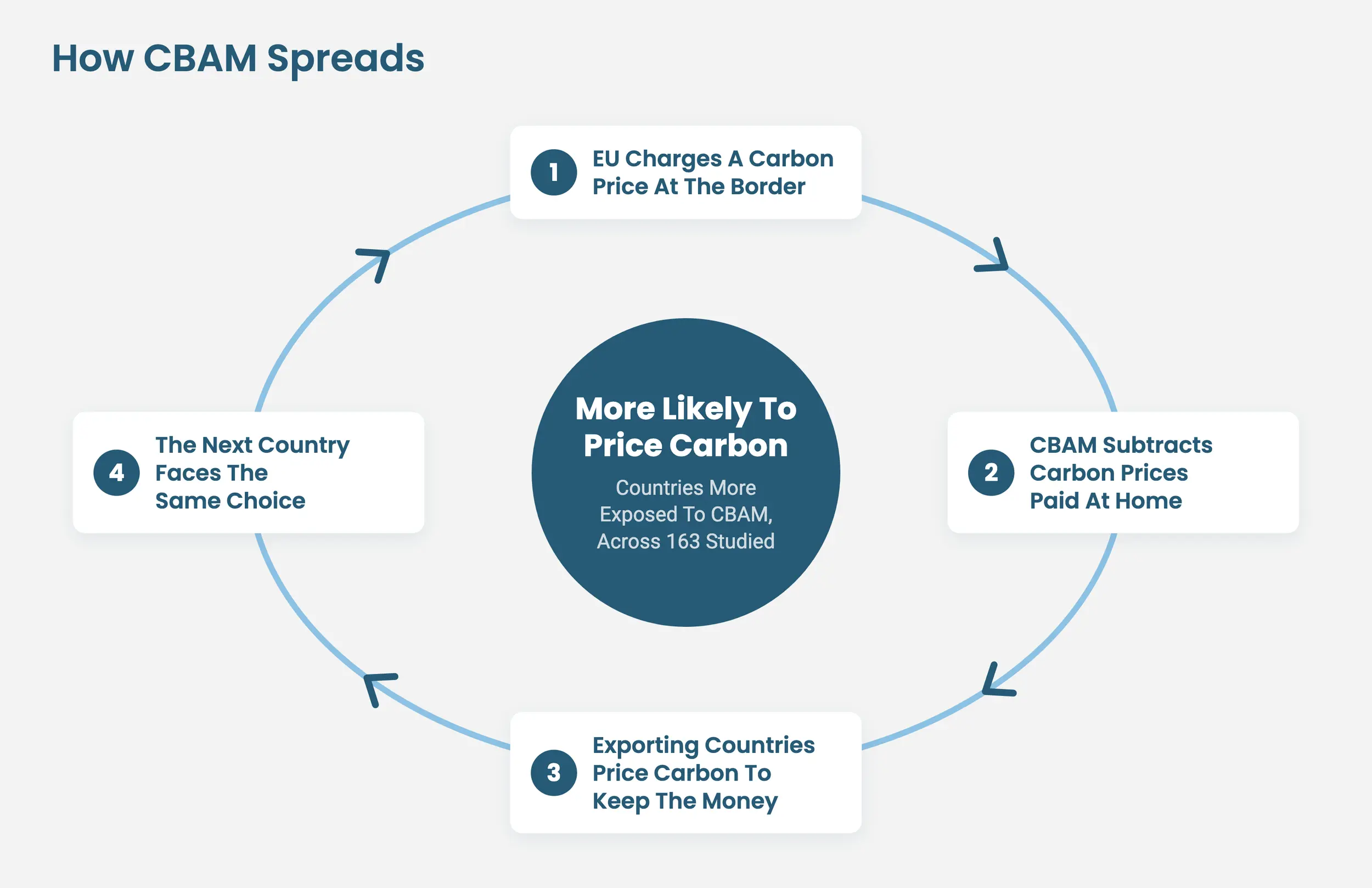
The UK’s carbon border tax and China’s product carbon rules follow the same pattern. These rules shape how emissions are measured across major supply chains. As more markets introduce product-level requirements, exporters will need reliable data to serve customers across regions.
Eight U.S. states have adopted Buy Clean policies that use Environmental Product Declarations (EPDs), verified reports of a product’s sustainability impact, to disclose or limit emissions from materials used in public projects. California’s SB 253 will also require large companies to report supply chain emissions (Scope 3) starting in 2027.
Although the U.S. has challenged parts of the EU’s approach, American companies must still meet the requirements of markets where they sell and respond to customer data requests. Without verified carbon data, they risk letting other countries set the standards they’re judged by. Buyers also favor competitors whose products are easier to compare and verify.
The Cost Of Waiting Climbs To 30% By 2028
The U.S. challenged CBAM, calling it an unfair trade practice that could cost American exports about $4.7 billion. But the EU’s CBAM carbon price took effect anyway, in January 2026.
These rules also affect companies outside Europe. EU customers need emissions data from their suppliers, and businesses that wait until deadlines approach struggle to collect supplier information or calculate product emissions. The costs add up quickly. When producers cannot provide verified emissions data, the EU uses a default value instead, a standard estimate of the product’s emissions, with a markup on top: 10% in 2026, 20% in 2027, and 30% from 2028.
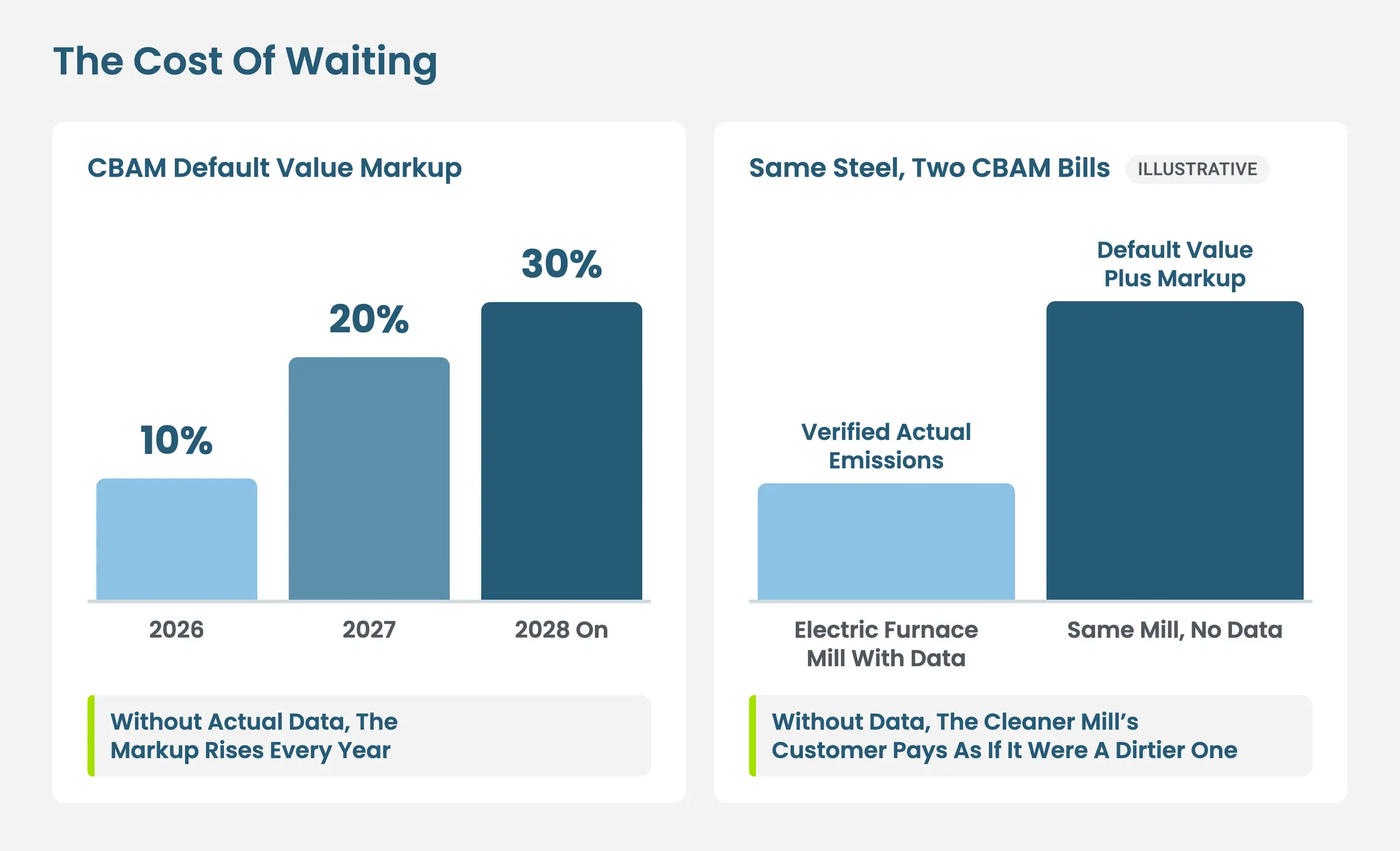
This hits cleaner producers hardest. For example, a U.S. steel mill using scrap metal and electric furnaces produces less carbon than one using coal and iron ore. Without verified emissions data, however, its EU customers pay based on the higher default value, increasing their CBAM costs.
Missing documentation also limits access to public projects with Buy Clean rules. Company-wide emissions figures cannot replace product-specific data when customers need proof of sustainability claims. Businesses should identify high-impact materials and suppliers, replace estimates with verified data, and assess how changes in production or sourcing could reduce costs and emissions.
Product Sustainability Data Is Now A Trade Asset
The next deadlines are approaching. On January 1, 2027, the UK and Norway start charging carbon prices at their borders, and in February 2027, EU importers start buying the certificates they use to pay CBAM.
One way to meet rigorous global sustainability standards is through Life Cycle Assessment (LCA). LCA evaluates a product’s sustainability impacts across its life, from raw material extraction to end-of-life. It provides a broader picture than a carbon figure alone and helps businesses develop the product-level evidence that customers and regulators now ask for.
A one-time study quickly becomes outdated as suppliers, materials, and production methods change. Businesses need information that keeps pace with those changes.
Is your business prepared for the next wave of product sustainability requirements? Download Boundless’ white paper, Europe Just Changed the Rules of Global Business, to understand what’s changing and what it means for your products, suppliers, and access to global markets.
See It in Action with LifeCycle IQ
Our LifeCycle IQ platform combines product-level LCA and cost analysis, benchmarked against 450+ industries, so you can compare suppliers, materials, and scenarios in one model that updates as your product changes — instead of a static study that's outdated in months.
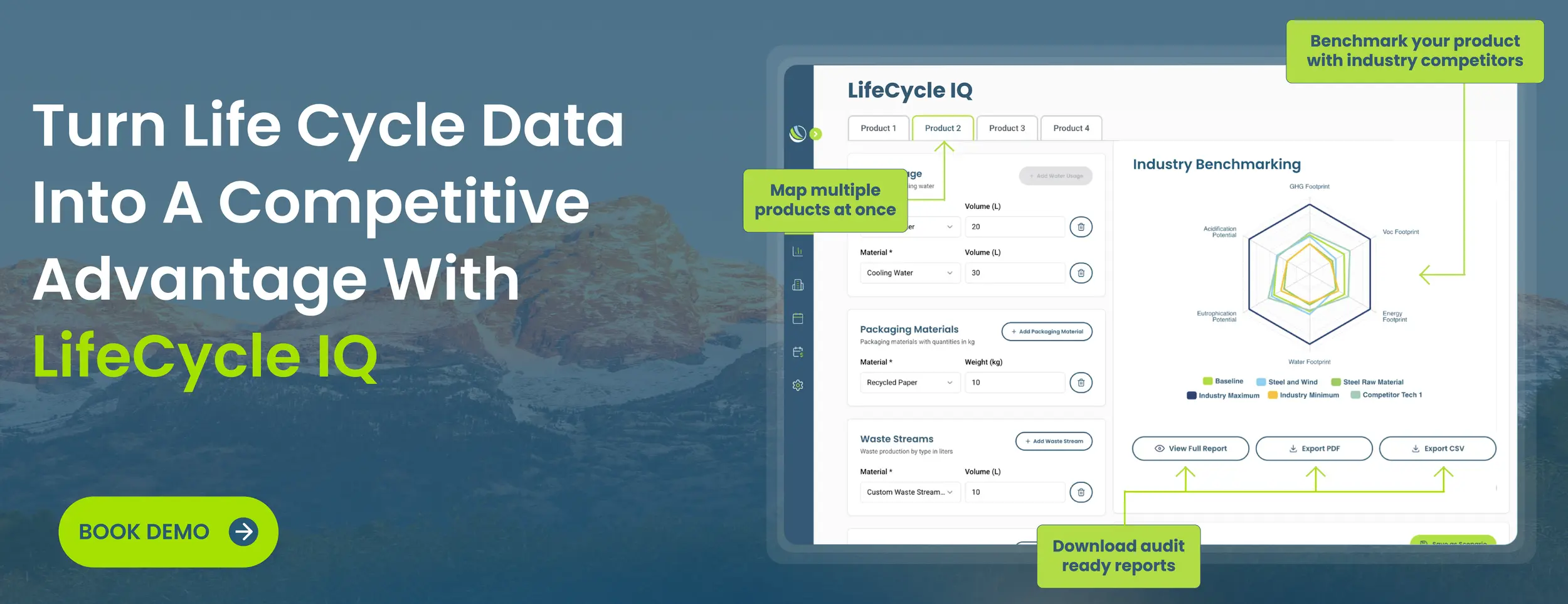
Book a short call to see how your products perform beyond carbon, from water use to particulate matter.


